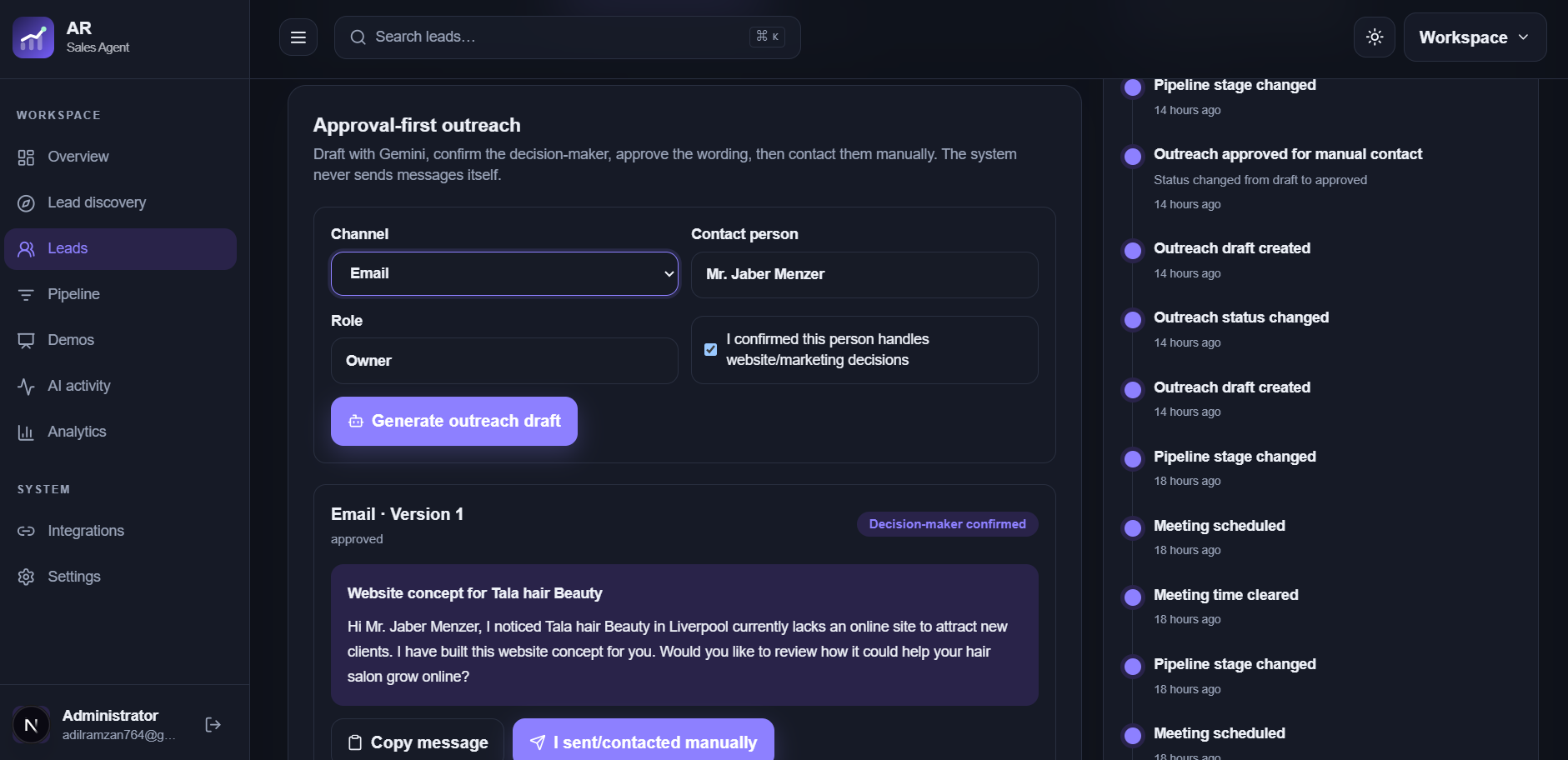
A good follow-up record preserves the conversation and the next useful action. Record what you sent or discussed, what the business said, and when it makes sense to reconnect.
After you call, email, or use a published contact form, note the channel, date, person or role, and brief purpose. Distinguish a message you drafted from one you actually sent. This prevents a later teammate from assuming outreach happened when it did not.
Capture the business's response
Summarize needs, constraints, objections, and requested next steps in plain language. If a person asks not to be contacted again, record that outcome. Keep the notes factual so future outreach reflects the real conversation.
Schedule a specific next action
Set a follow-up date when there is a reason to act: a promised proposal, a requested check-in, or a discussion to resume. Add the action itself, such as sending a revised concept or confirming a meeting, instead of a vague reminder to follow up.
Review before reconnecting
Read the lead's latest note, website findings, and previous contact before sending anything else. Update stale details and avoid repeating the same pitch. If the opportunity is no longer relevant, close it rather than rescheduling indefinitely.
Frequently asked questions
Does the app send follow-up messages automatically?
No. You choose the recipient, review the content, and send messages yourself.
What should a follow-up reminder contain?
A date, the promised or planned action, and enough context to continue the conversation accurately.